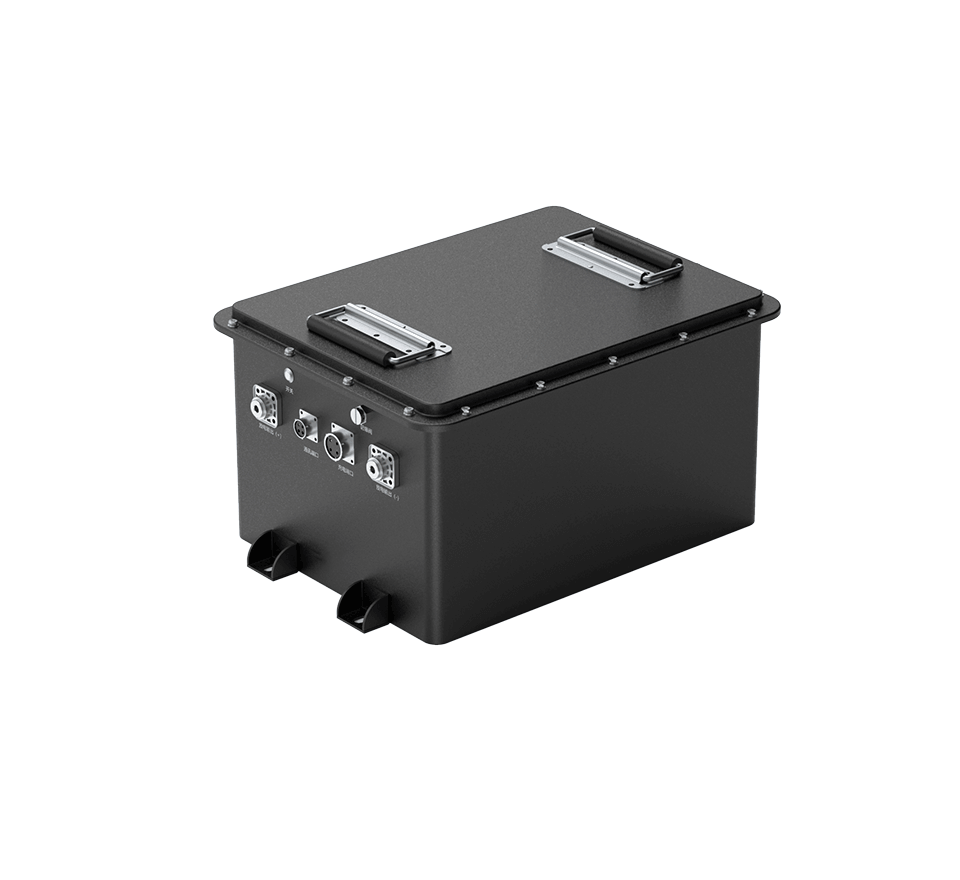
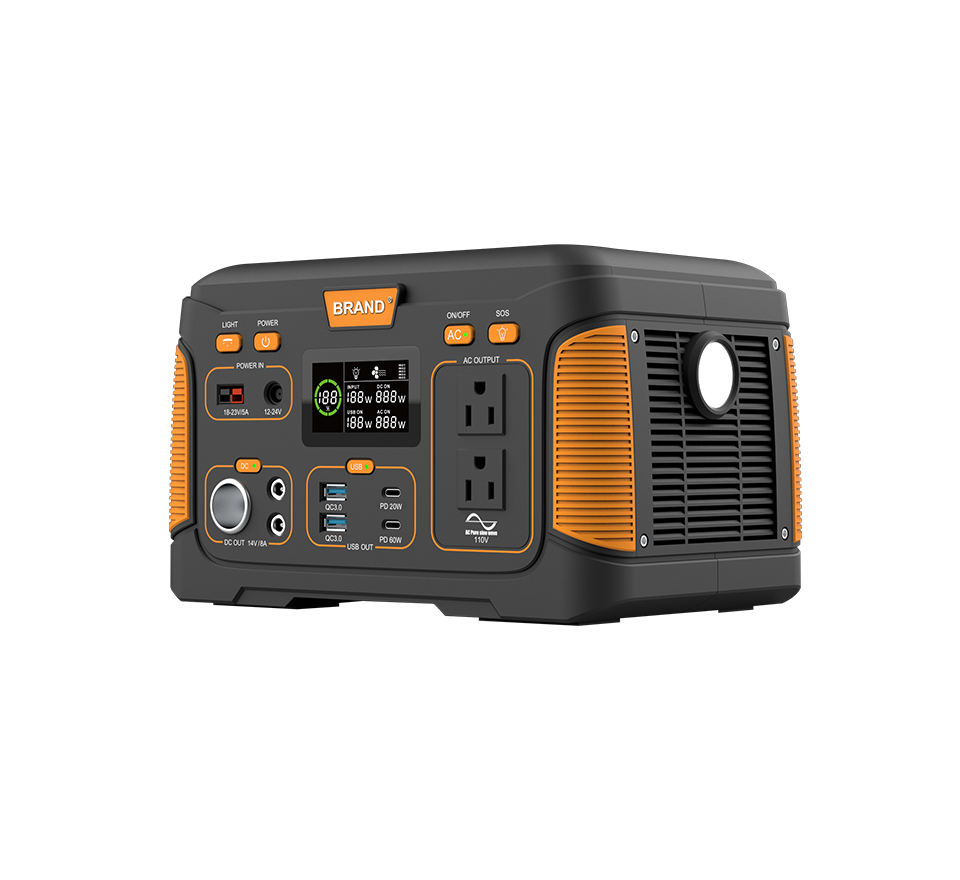
A lithium iron phosphate battery refers to a lithium-ion battery that uses lithium iron phosphate as the cathode material. The primary cathode materials for lithium-ion batteries include lithium cobalt oxide, lithium manganese oxide, lithium nickel oxide, ternary materials, and lithium iron phosphate. Among these, lithium cobalt oxide is currently the cathode material used in the vast majority of lithium-ion batteries. In terms of the material's fundamental principle, lithium iron phosphate also involves an intercalation and deintercalation process, which is identical to the principles of lithium cobalt oxide and lithium manganese oxide.
1. Introduction
Lithium iron phosphate batteries belong to the category of lithium-ion secondary batteries. One of their main uses is as power batteries, offering significant advantages compared to Ni-MH and Ni-Cd batteries.
Lithium iron phosphate batteries have high charge and discharge efficiency. Under rate discharge conditions, the charge-discharge efficiency can exceed 90%, whereas for lead-acid batteries, it is about 80%.
2. Eight Major Advantages
Improved Safety Performance:
The P-O bonds in the lithium iron phosphate crystal are stable and difficult to decompose. Even under high temperatures or overcharge conditions, they do not undergo structural collapse, generate heat, or form strongly oxidizing substances like lithium cobalt oxide, thus possessing good safety. Reports indicate that in practical tests like nail penetration or short-circuit experiments, a small number of samples exhibited combustion, but no explosions occurred. In overcharge tests using voltages significantly higher than the discharge voltage, explosions were still observed. Nevertheless, its overcharge safety is greatly improved compared to ordinary liquid electrolyte lithium cobalt oxide batteries.
Improved Lifespan:
A lithium iron phosphate battery refers to a lithium-ion battery that uses lithium iron phosphate as the cathode material.
The cycle life of long-life lead-acid batteries is around 300 cycles, with a maximum of 500 cycles. In contrast, lithium iron phosphate power batteries can achieve a cycle life of over 6000 cycles. With standard charging (5-hour rate), they can reach 6000 cycles. A lead-acid battery of the same quality might last "six months new, six months old, and another six months with maintenance," totaling at most 1-1.5 years. Under the same conditions, a lithium iron phosphate battery has a theoretical lifespan of 10-15
years. Considering all factors, the performance-to-price ratio is theoretically more than four times that of lead-acid batteries. They support high-current discharge and can be rapidly charged and discharged at high rates of 2C. With a dedicated charger, a 1.5C charge can fully charge the battery within 40 minutes, with a starting current capability of up to 2C, a feature not available in lead-acid batteries.
Good High-Temperature Performance:
The thermal peak of lithium iron phosphate can reach 350°C-500°C, while lithium manganese oxide and lithium cobalt oxide are only around 200°C. They have a wide operating temperature range (-20°C to +75°C) and are characterized by high-temperature resistance. The thermal peak of lithium iron phosphate can reach 350°C-500°C, whereas lithium manganese oxide and lithium cobalt oxide are only around 200°C.
High Capacity:
They have a larger capacity compared to ordinary batteries (like lead-acid). The unit cell capacity ranges from 5AH to 1000AH.
No Memory Effect:
Rechargeable batteries often working under conditions of being fully charged but not fully discharged can rapidly lose capacity below the rated value; this phenomenon is called the memory effect. Batteries like Ni-MH and Ni-Cd have memory effects, whereas lithium iron phosphate batteries do not exhibit this phenomenon. The battery can be charged and used at any state, without the need to discharge fully before charging.
Light Weight:
The volume of a lithium iron phosphate battery with the same specifications and capacity is two-thirds that of a lead-acid battery, and its weight is one-third.
Environmental Protection:
These batteries are generally considered to contain no heavy metals or rare metals (Ni-MH batteries require rare metals), are non-toxic (certified by SGS), non-polluting, comply with European RoHS regulations, and are absolutely green and environmentally friendly batteries. Therefore, the primary reason the industry views lithium batteries favorably is environmental consideration. Consequently, this battery technology has been included in China's "863" National High-Tech Development Plan during the Tenth Five-Year Plan period, becoming a project receiving national key support and encouragement. With China's accession to the WTO, the export volume of Chinese electric bicycles is rapidly increasing, and electric bicycles entering Europe and America are already required to be equipped with non-polluting batteries.
However, some experts point out that the environmental pollution caused by lead-acid batteries mainly occurs during non-standard production processes and recycling stages. Similarly, while the lithium battery industry falls under new energy, it cannot completely avoid the issue of heavy metal pollution. Processing metallic materials may release lead, arsenic, cadmium, mercury, chromium, etc., into dust and water. The battery itself is a chemical substance, so two types of pollution are possible: first, process discharge pollution during production; second, pollution from discarded batteries.
Lithium iron phosphate batteries also have their disadvantages: for example, poor low-temperature performance, low tap density of the cathode material, meaning that lithium iron phosphate batteries of the same capacity are larger in volume than lithium cobalt oxide and other lithium-ion batteries, thus they do not hold an advantage in micro-batteries. When used in power batteries, lithium iron phosphate batteries, like others, face the challenge of battery consistency.
Comparison of Power Batteries
Currently, the most promising cathode materials for power-type lithium-ion batteries are mainly modified lithium manganese oxide (LiMn2O4), lithium iron phosphate (LiFePO4), and lithium nickel cobalt manganese oxide (Li(Ni,Co,Mn)O2) ternary materials. Due to the scarcity of cobalt resources, the high cost of nickel and cobalt, and significant price fluctuations, lithium nickel cobalt manganese oxide ternary materials are generally considered difficult to become the mainstream for power-type lithium-ion batteries in electric vehicles, but they can be mixed with spinel lithium manganese oxide within a certain range.
Industry Applications
Carbon-coated aluminum foil brings technological innovation and industrial upgrading to the lithium battery industry; it enhances the performance of lithium battery products and improves the discharge rate.
As domestic battery manufacturers increasingly demand higher battery performance, there is widespread recognition in China of new energy battery materials: conductive materials, conductive coated aluminum foil, and copper foil.
Its advantage lies in the fact that when handling battery materials, issues like good high-rate charge-discharge performance and relatively high specific capacity are often accompanied by poor cycle stability and severe decay, forcing compromises. This is a remarkable coating that enhances battery performance and ushers in a new era.
The conductive coating consists of well-dispersed nano-conductive graphite-coated particles, etc. It provides excellent static conductivity and is a protective energy absorption layer. It also offers good covering protective performance. The coatings are available in water-based and solvent-based forms and can be applied to aluminum sheets, copper sheets, stainless steel, and aluminum and titanium bipolar plates.
The carbon coating improves lithium battery performance in the following ways:
Reduces battery internal resistance and inhibits the increase in dynamic internal resistance during charge-discharge cycles.
Significantly improves the consistency of battery packs, reducing the cost of battery packs.
Improves the adhesion between the active material and the current collector, reducing electrode manufacturing costs.
Reduces polarization, improves rate performance, and lowers thermal effects.
Prevents corrosion of the current collector by the electrolyte.
Comprehensive factors ultimately extend battery service life.
Coating thickness: conventionally 1-3μm per side.
In recent years, Japan and South Korea have primarily developed power-type lithium-ion batteries using modified lithium manganese oxide and lithium nickel cobalt manganese oxide ternary materials as cathodes, involving companies like Panasonic EV Energy (a joint venture between Toyota and Panasonic), Hitachi, Sony, Shin-Kobe Electric, NEC, Sanyo Electric, Samsung, and LG. The United States mainly develops power-type lithium-ion batteries using lithium iron phosphate as the cathode material, such as A123 Systems and Valence Technology. However, major American automobile manufacturers have chosen manganese-based cathode material systems for their PHEVs and EVs. It is also said that A123 is considering entering the lithium manganese oxide material field. European countries like Germany mainly develop electric vehicles through cooperation with battery companies from other countries, such as the alliance between Daimler Benz and France's Saft, and the cooperation agreement between Volkswagen and Japan's Sanyo. Currently, Germany's Volkswagen and France's Renault are also developing and producing power-type lithium-ion batteries with support from their respective governments.
3. Disadvantages
Whether a material has potential for application and development depends not only on its advantages but, more crucially, on whether it has fundamental defects.
Currently, there is a general preference in China for lithium iron phosphate as the cathode material for power-type lithium-ion batteries. Government, research institutions, enterprises, and even securities analysts view this material favorably as the development direction for power-type lithium-ion batteries. The reasons for this can be summarized in two main points: First, it is influenced by the US R&D direction; US companies Valence and A123 were the earliest to adopt lithium iron phosphate for lithium-ion battery cathodes. Second, China had not previously been able to produce lithium manganese oxide material with good high-temperature cycle and storage performance suitable for power-type lithium-ion batteries. However, lithium iron phosphate also has fundamental defects that cannot be ignored, summarized as follows:
During the sintering process in the preparation of lithium iron phosphate, there is a possibility that iron oxide may be reduced to elemental iron under a high-temperature reducing atmosphere. Elemental iron can cause micro-shorts in the battery, which is the most undesirable substance in batteries. This is also a main reason why Japan has not adopted this material as the cathode for power-type lithium-ion batteries.
Lithium iron phosphate has some performance defects, such as low tap density and compaction density, resulting in lower energy density for lithium-ion batteries. Its low-temperature performance is poor, and even nanonization and carbon coating have not solved this problem. Dr. Don Hillebrand, Director of the Energy Storage System Center at Argonne National Laboratory in the US, described the low-temperature performance of lithium iron phosphate batteries as "terrible." Their test results on lithium iron phosphate batteries showed that they cannot power electric vehicles at low temperatures (below 0°C). Although some manufacturers claim good capacity retention for lithium iron phosphate batteries at low temperatures, this is under conditions of small discharge currents and very low discharge cutoff voltages, where equipment simply cannot start working.
The preparation cost of the material and the manufacturing cost of the battery are high, with low product yield and poor consistency. The nanonization and carbon coating of lithium iron phosphate, while improving electrochemical performance, also bring other problems, such as reduced energy density, increased synthesis costs, poor electrode processing performance, and demanding environmental requirements. Although the chemical elements Li, Fe, and P in lithium iron phosphate are abundant and low-cost, the resulting lithium iron phosphate product cost is not low. Even excluding initial R&D costs, the process cost of the material combined with the high cost of battery preparation leads to a higher final cost per unit of stored energy.
Poor product consistency. Currently, no domestic lithium iron phosphate material manufacturer has been able to solve this problem. From the perspective of material preparation, the synthesis reaction of lithium iron phosphate is a complex multi-phase reaction involving solid-phase phosphates, iron oxides, lithium salts,外加 carbon precursors, and a reducing gas atmosphere. Ensuring reaction consistency in this complex process is very difficult.
Intellectual property issues. The earliest patent application related to lithium iron phosphate was obtained by F X MITTERMAIER & SOEHNE OHG on June 25, 1993, and published on August 19 of the same year. The basic patent for lithium iron phosphate is owned by the University of Texas, and the carbon coating patent was applied for by a Canadian. These two fundamental patents cannot be bypassed. If patent royalty fees are included in the cost, the product cost will increase further.
Furthermore, based on the experience of R&D and production of lithium-ion batteries, Japan was the first country to commercialize lithium-ion batteries and has consistently dominated the high-end lithium-ion battery market. Although the US leads in some basic research, there are no large-scale lithium-ion battery manufacturers there to date. Therefore, Japan's choice of lithium manganese oxide as the cathode material for power-type lithium-ion batteries has its rationale. Even in the US, manufacturers using lithium iron phosphate and lithium manganese oxide for power-type lithium-ion battery cathodes are roughly split, and the federal government supports R&D in both systems. Given the aforementioned problems with lithium iron phosphate, it is difficult for it to gain widespread application in fields like new energy vehicles as the cathode material for power-type lithium-ion batteries. If the challenge of poor high-temperature cycle and storage performance of lithium manganese oxide can be overcome, its advantages of low cost and high rate performance give it great potential for application in power-type lithium-ion batteries.
4. Working Principle and Characteristics
The full name of the lithium iron phosphate battery is the lithium iron phosphate lithium-ion battery. This name is too long, so it is abbreviated as the lithium iron phosphate battery. Since its performance is particularly suitable for power applications, the word "power" is added to the name, resulting in "lithium iron phosphate power battery." Some also call it the "LiFe power battery."
Significance
In the metal market, cobalt is the most expensive and has limited reserves. Nickel and manganese are cheaper, and iron is the cheapest. The price of cathode materials aligns with the prices of these metals. Therefore, lithium-ion batteries made with LiFePO4 cathode material should be the cheapest. Another characteristic is their environmental friendliness.
The requirements for rechargeable batteries are: high capacity, high output voltage, good charge-discharge cycle performance, stable output voltage, capability for high current charge-discharge, electrochemical stability, safety in use, wide operating temperature range, non-toxic or low toxicity, and environmental friendliness. LiFePO4-based lithium iron phosphate batteries perform well in these requirements, especially in terms of high discharge rate capability, stable discharge voltage, safety, lifespan, and environmental friendliness. They are considered the best for high-current output power batteries currently available.
Structure and Working Principle
The internal structure of a LiFePO4 battery consists of olivine-structured LiFePO4 as the positive electrode, connected by an aluminum foil. In the middle is a polymer separator that separates the positive and negative electrodes, allowing lithium ions to pass through but not electrons. The right side is the negative electrode composed of carbon, connected by a copper foil. The electrolyte is between the upper and lower ends of the battery, and the battery is sealed with a metal casing.
When charging a LiFePO4 battery, lithium ions from the positive electrode migrate through the polymer separator to the negative electrode. During discharge, lithium ions from the negative electrode migrate through the separator back to the positive electrode. Lithium-ion batteries are named for the shuttling of lithium ions during charge and discharge.
Main Performance
The nominal voltage of a LiFePO4 battery is 3.2V, the termination charge voltage is 3.6V, and the termination discharge voltage is 2.0V. Due to differences in the quality of positive/negative electrode materials, electrolytes, and manufacturing processes among different producers, there can be some variation in performance. For example, the capacity of the same model can vary significantly.
It should be noted that lithium iron phosphate power batteries from different factories may have slight differences in performance parameters. Also, some battery performance aspects are not listed here, such as internal resistance, self-discharge rate, and charge-discharge temperature.
The capacity of lithium iron phosphate power batteries varies greatly and can be divided into three categories: small (a few tenths to a few mAh), medium (tens of mAh), and large (hundreds of mAh). Parameters may differ slightly among different types. Currently, the widely used small standard cylindrical lithium iron phosphate power battery has dimensions: 18mm in diameter and 65mm in height.
Zero-Voltage Over-Discharge Test
A test was conducted using an STL18650 lithium iron phosphate power battery discharged to zero voltage. Test conditions: Charge a 1100mAh STL18650 battery at 0.5C rate, then discharge at 1.0C rate until the battery voltage reaches 0V. The zero-voltage batteries were divided into two groups: one stored for 7 days, the other for 30 days. After storage, they were fully charged at 0.5C rate and then discharged at 1.0C rate. The difference between the two storage periods was compared.
The test results showed that after 7 days of storage at zero voltage, the battery showed no leakage, good performance, and 100% capacity. After 30 days of storage, there was no leakage, performance was good, and capacity was 98%. After three more charge-discharge cycles, the capacity of the 30-day stored battery recovered to 100%.
This test indicates that even if over-discharged and stored for a period, the battery does not leak or get damaged. This is a characteristic not found in other types of lithium-ion batteries.
Characteristics of Lithium Iron Phosphate Batteries
Based on the above, LiFePO4 battery characteristics can be summarized as follows:
High efficiency output: Standard discharge 2-5C, continuous high current discharge up to 10C, instant pulse discharge up to 20C.
Good performance at high temperatures: When external temperature is 65°C, internal temperature can reach 95°C. Battery temperature can reach 160°C at the end of discharge, yet the battery structure remains safe and intact.
Does not burn or explode even if internally or externally damaged; highest safety.
Excellent cycle life; after 5000 cycles, discharge capacity remains above 95%.
Not damaged even if over-discharged to zero volts.
Capable of fast charging.
Low cost.
Environmentally friendly.
Applications of Lithium Iron Phosphate Power Batteries
Due to these characteristics and the availability of various capacities, lithium iron phosphate power batteries are quickly finding wide application. Main application areas include:
Large electric vehicles: buses, electric cars, tourist attraction vehicles, hybrid vehicles, etc.
Light electric vehicles: electric bicycles, golf carts, small electric trolleys, forklifts, cleaning vehicles, electric wheelchairs, etc.
Power tools: electric drills, saws, lawn mowers, etc.
Remote control toys: cars, boats, airplanes, etc.
Energy storage for solar and wind power.
UPS, emergency lights, warning lights, miner's lamps.
Replacement for 3V primary lithium batteries and 9V Ni-Cd or Ni-MH rechargeable batteries in cameras.
Small medical equipment and portable instruments.
Here is an example of replacing a lead-acid battery with a lithium iron phosphate power battery. Using a 36V/10Ah lead-acid battery weighing 12kg, one charge allows travel of about 50km, with about 100 charge cycles and a lifespan of about 1 year. Using a lithium iron phosphate power battery with the same energy requires about 4kg weight, allows about 80km per charge, over 5
000 charge cycles, and a lifespan of 5-7 years. Although the initial cost is higher, the overall economic effect is better, and it is more convenient due to lighter weight.
5. Battery Performance
The performance of lithium-ion power batteries depends mainly on the positive and negative electrode materials. Lithium iron phosphate as a material for lithium batteries emerged only recently. Large-capacity lithium iron phosphate batteries were developed in China around July 2005. Their safety and cycle life are unmatched by other materials, which are the most important technical indicators for power batteries. The cycle life under 1C charge-discharge can reach 10000 cycles. A single cell does not burn when overcharged to 30V and does not explode upon nail penetration. Using lithium iron phosphate as the cathode material makes it easier to series-connect large-capacity lithium-ion batteries to meet the frequent charge-discharge needs of electric vehicles. They are non-toxic, non-polluting, safe, have widely available raw materials, are low-cost, have a long life, and are considered the ideal cathode material for the new generation of lithium-ion batteries.
This project belongs to the development of functional energy materials within high-tech projects and is a key area supported by China's "863" Program, "973" Program, and the "Eleventh Five-Year" Plan for High-Tech Industry Development.
 86-18664968482
 info@eastarco.com sales6@eastarbattery.com
 RM 905,Hongchang Plaza,Shennan Road East, luohu District, Shenzhen



.png)
.png)
.png)